
'Right to apprenticeship means that anyone below the age of 25 years with a diploma or other qualifications can demand an apprenticeship with a private, a public sector company or a government organisation. And when he/she demands this, it is the obligation of the government to provide it.'

The new scheme, promoting manufacturing of electric vehicles (EVs) by global majors, will give a fillip to companies like Tesla and its upstart rival Vinfast, both of whom have lobbied for lower import duties from the Centre. While Vinfast has already announced an investment of Rs 4,000 crore to set up an electric vehicle (EV) plant in Tamil Nadu, Tesla's next move will be watched carefully. Four years ago, Musk announced that his company would come to India.
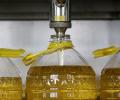
The protesting farmers' main demand to legalise the minimum support price (MSP) regime has divided opinion. One school of thought says it would lead to crop diversification and help India keep under check its burgeoning import bill on edible oils and pulses, while another says it would incentivise farmers to produce low-quality crops. Contrary to popular perception, India has a trade surplus in agriculture and allied activities, which stood at $18.65 billion during 2022-23 (FY23) against $15.92 billion in the previous year. However, the surplus was mainly on account of rice, wheat, sugar, spices, and buffalo meat.


India is all set to make its presence felt in the $47 billion global outsourced semiconductor testing and packaging market, an arena where Malaysia and Vietnam have been way ahead so far. The Cabinet last Thursday cleared two projects, the Tata's assembly testing and packaging plant (ATMP) and the Murugappa-owned CG Power with Renesas from Japan as its tech partner. These, together with Micron's assembly and testing plant which is already being constructed in Sanad in Gujarat, will collectively invest Rs 47,300 crore to set up the factories.

Tax devolution shares, which threaten to create a north-south divide among states, may have more to do with per capita income, and not so much with population.
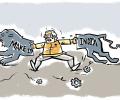
The Department for Promotion of Industry and Internal Trade (DPIIT) has proposed to raise the minimum local content under public procurement order in government contracts. But several local suppliers and multinational companies (MNCs) are saying such a steep target is not attainable. Class-I suppliers, whose goods, services or works offered for procurement has local content equal to or more than 50 per cent may see it hiked to 70 per cent, while it may go up to 50 per cent from 20 per cent for Class-II suppliers.

At $16.8 million per match, the IPL is only behind America's National Football League.

Government unlikely to bring in an ordinance to address the developments arising out of the Supreme Court order.

'Personal income tax is growing by 27 per cent and most refunds have already been issued.'

Can the launch of smartphones under its own brand name by Finnish company HMD Global - despite having a licence to use the Nokia brand which it bought from Microsoft - help it regain its once dominant position in the mobile phone sweepstakes in India, where it was once routed? In 2009, Nokia was the country's largest MNC with revenues of $4 billion and a market share touching 80 per cent in 2010. After this, its fortunes fell. Although it had been the first global player to set up an assembly plant, not only to assemble phones for the local market but for exports, it had to shut down operations in 2014.
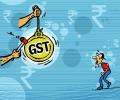
'We crossed Rs 1.7 trillion in three months this financial year.'

Even as the government debates whether to continue the FAME-II subsidy for electric vehicles (EVs), the share of such vehicles in overall sales is decelerating, after witnessing a heady growth in the first few years. The penetration of EVs - electric two-wheelers, passenger vehicles, three- wheelers and other segments collectively - in the first 10 months of FY24 has been pegged at 4.3 per cent, compared to 3.7 per cent in FY23, according to credit rating agency ICRA.
In a big push to the production-linked incentive (PLI) scheme, the government has nearly doubled (increase of 81 per cent) the allocation in five key industry segments from Rs 8,405 crore in the Revised Estimate of FY24 to Rs 15,198 crore in the Interim Budget for FY25. The segments cover over eight PLI schemes, including mobile phones, IT hardware, pharma (PLIs for medical devices, intermediates and pharmaceuticals), food processing, telecom hardware and, auto and auto components. In FY24, DPIIT officials, however, said that the disbursements would be much higher at around Rs 11,000 crore than what has been budgeted for the year.

On the back of robust tax collection, the ratio of direct taxes to gross domestic product (GDP) this financial year is likely to be the highest in this century so far. This, along with strong goods and services tax (GST) collection, may drive up receipts from central taxes as a proportion of GDP to the highest level or close to the highest since 2008-09 despite subdued excise and customs duty receipts. This will be due also to lower nominal GDP projected in the first advance estimates for 2023-24.

Bajaj Auto, the king of the market for CNG-powered passenger three-wheelers, now wants to replicate this dominance in two-wheelers. The difference is that while the former is zooming - registrations for CNG-powered passenger three-wheelers nearly doubled during January-December 2023 - the latter, meaning a market for CNG-powered two-wheelers, does not exist.

Apple Inc is expected to produce iPhones worth $12 billion (freight on board value) in India during 2023-24, according to discussions between the company's vendors and the government. This would account for around 12 per cent of Apple's global iPhone production-higher than the earlier plan of shifting around 9 per cent of the total to India by FY24, which is the third year of the PLI (production-linked incentive) scheme.

Growth rate in per capita income is projected to fall to the lowest in 21 years this financial year - except for the financial years 2019-20 (FY20) and 2020-21 (FY21) - according to the first advance estimates. During the last 21 years, the two periods - FY20 and FY21 - saw growth rates in per capita income lower than 7.9 per cent, seen during FY24. This was despite the real gross domestic product (GDP) being projected to grow by 7.3 per cent in the current financial year by the first advance estimates.

Data for the first nine days of January shows that tourist arrivals from India to the Maldives has been at similar levels as last year during the same period.

Indian shoppers accounted for 13 per cent of the total hours spent by mobile users across the globe on their shopping apps in 2023, next only to China in this regard. According to the "State of Mobile -2024" report released a few days ago by data.ai (previously known as App Annie), which looks into various segments of the app economy across the world, in the last calendar year, users in India collectively spent 12.84 billion hours on shopping apps. This represents an increase of over 73 per cent from the time they spent in 2020 and of more than 3.5 per cent over 2022.
 © 2026 Rediff.com - Advertise with us - Disclaimer - Privacy Policy - Sitemap - Feedback - About us - Terms of use - Grievances